
The phrase “sugar daddy” might sound distinctly modern, but the relationship dynamics it describes have existed for centuries. If you’re exploring what a sugar daddy is or trying to understand how sugar dating emerged as a recognized social phenomenon, you’re looking at a practice with surprisingly deep historical roots that stretch back long before dating apps or even the internet.
Sugar dating typically refers to a relationship where one person—often called a sugar daddy or sugar mommy—provides financial support, gifts, mentorship, or lifestyle experiences to another person, known as a sugar baby, in exchange for companionship, emotional connection, or sometimes intimacy. These arrangements are consensual and vary widely in structure, from occasional meetings to long-term partnerships that may resemble traditional relationships in some ways.
While the specific term “sugar dating” is recent, the fundamental exchange it describes—companionship for financial support—has appeared throughout history under different names and social contexts. This article traces that evolution from the mistresses of the early 20th century through mid-century kept women to today’s app-based arrangements, examining how economic conditions, gender roles, technology, and cultural attitudes have shaped these relationships across time.
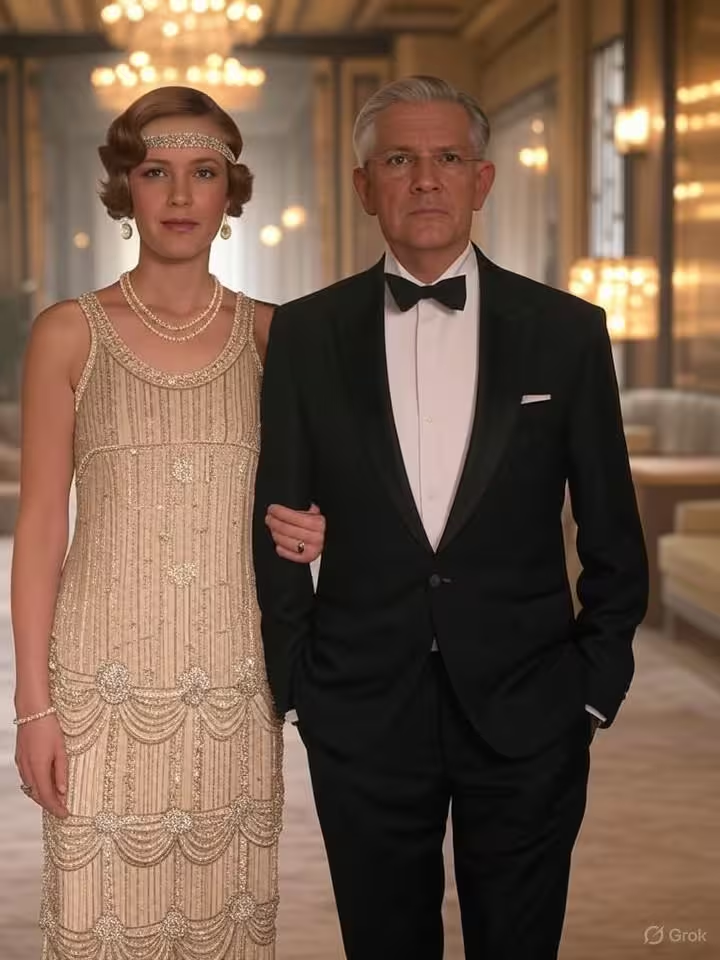
The 19th century roots: courtesans and kept women
To understand where sugar dating comes from, we need to look back to the 19th century and even earlier. Arrangements where wealthy individuals supported companions outside of marriage have existed across cultures for centuries, though they went by different names and operated under different social rules.
In Victorian-era Europe and America, wealthy men often supported mistresses or courtesans—women who provided companionship and intimacy outside of marriage. These relationships existed in a complicated social space: sometimes hidden, sometimes an open secret depending on the social circle and location. The key difference from marriage was the explicitly financial nature of the arrangement and its existence outside legal or religious frameworks.
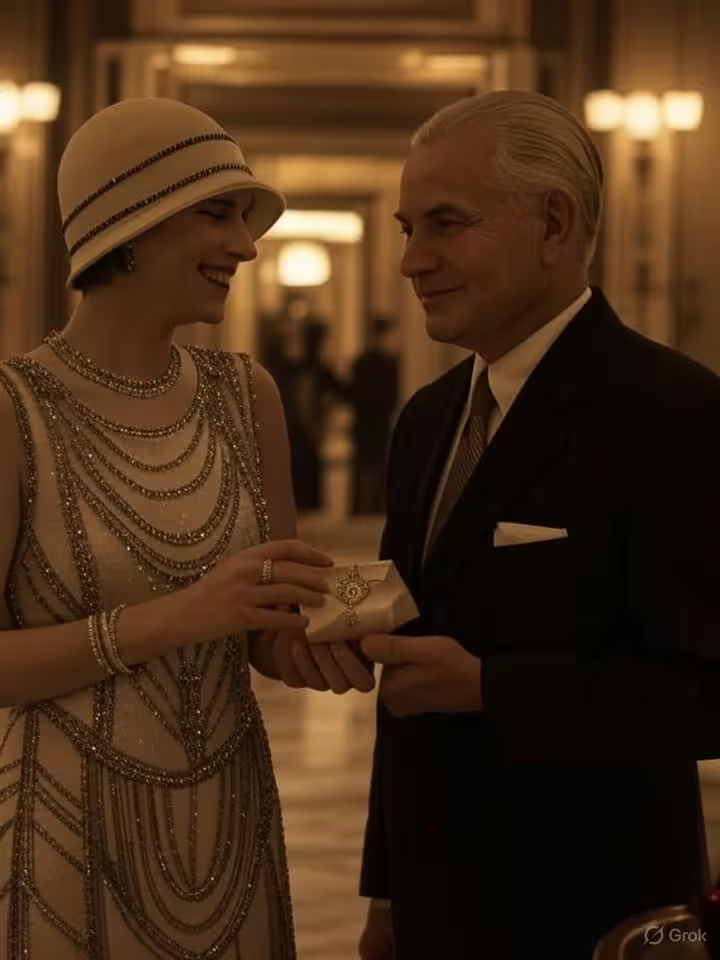
In France during the Belle Époque (roughly 1870s to 1914), courtesans occupied a unique social position. Famous courtesans like Liane de Pougy, La Belle Otero, and Émilienne d’Alençon were celebrated public figures who attended opera premieres, appeared in society columns, and moved among the wealthy elite. These women received apartments in fashionable districts, jewelry, clothing allowances, and substantial financial settlements from their patrons—often multiple patrons simultaneously.
According to historian Virginia Rounding’s research in Grandes Horizontales: The Lives and Legends of Four Nineteenth-Century Courtesans, these arrangements were understood by all parties involved. Courtesans negotiated their terms, maintained some degree of independence, and in some cases accumulated enough wealth to retire comfortably. However, it’s crucial to note that this was not universal; many women in similar circumstances had far less agency and faced economic desperation rather than opportunity.
In America during the same period, similar dynamics existed but were discussed more discreetly due to stricter Victorian moral codes. Wealthy industrialists in cities like New York, Chicago, and San Francisco often maintained “second establishments” where they supported women outside their marriages. These arrangements were rarely discussed publicly but were common enough to be reflected in literature of the era, such as Theodore Dreiser’s Sister Carrie (1900), which portrayed a young woman navigating relationships with increasingly wealthy men who supported her materially.
Economic context matters
Why did these arrangements flourish? The economic context is essential. In the 19th and early 20th centuries, most women had severely limited economic opportunities. Respectable employment options were scarce, wages were far lower than men’s for the same work, and marriage was often the primary path to financial security. For women without family wealth or prospects for advantageous marriage, arrangements with wealthy men could offer material security that legitimate employment simply couldn’t match.

This doesn’t mean all participants were economically desperate. Some courtesans and mistresses were actresses, dancers, artists, or women from modest backgrounds who saw these arrangements as preferable to available alternatives. The motivations were complex and varied by individual circumstance.
The 1920s: when “sugar daddy” entered the language
The specific term “sugar daddy” emerged during the 1920s in the United States, a decade of dramatic social change known as the Roaring Twenties or the Jazz Age. This was an era of economic prosperity, loosening social restrictions, and changing gender roles, particularly for young urban women.
The phrase’s origin is often traced to Adolph Spreckels, heir to the Spreckels sugar fortune, who married Alma de Bretteville in 1908 when he was 50 and she was 24. She reportedly called him her “sugar daddy,” a playful reference both to his sugar fortune and his generous gifts. The term caught on quickly, appearing in newspaper columns, vaudeville performances, and popular songs throughout the 1920s.
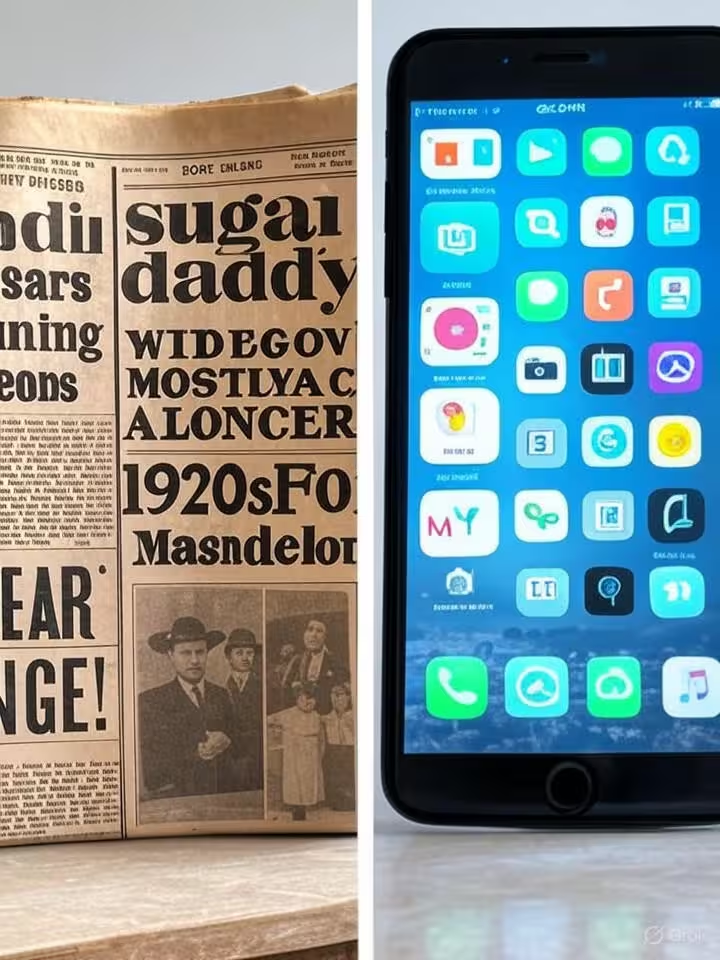
According to language historian Jonathan Lighter’s Historical Dictionary of American Slang, “sugar daddy” was widely used by 1926 and appeared in mainstream publications. The term’s playful tone reflected the era’s attitudes—less moralistic judgment and more acknowledgment of arrangements that had always existed but were now discussed more openly.
Flappers and economic independence
The 1920s context is important for understanding how these relationships evolved. Young women called flappers challenged Victorian restrictions by cutting their hair short, wearing shorter skirts, drinking in speakeasies, and pursuing careers. Many women entered the workforce during World War I and were reluctant to return entirely to domestic roles afterward.
Yet economic independence remained elusive for most. Women earned approximately 50-60% of men’s wages for comparable work, according to U.S. Department of Labor historical data. For aspiring actresses, artists, models, or women seeking urban glamour beyond what their salaries could provide, relationships with wealthy “sugar daddies” offered access to lifestyle, connections, and experiences otherwise out of reach.
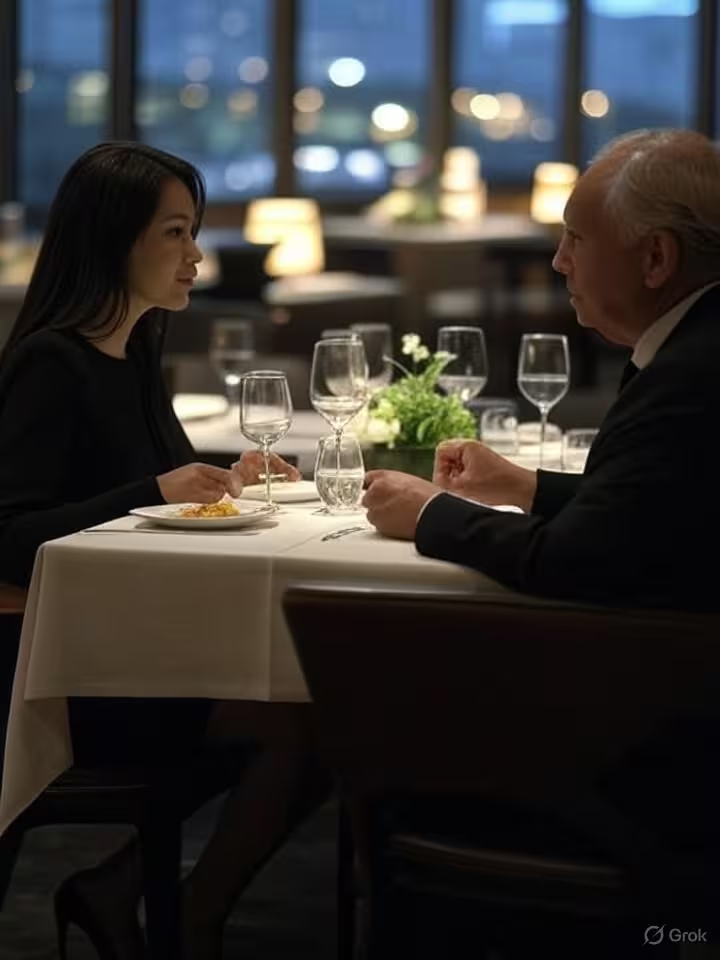
Popular culture reflected this reality. Songs like “Sugar Daddy Blues” and films featuring wealthy older men courting younger women became common entertainment. F. Scott Fitzgerald’s The Great Gatsby (1925) included elements of these dynamics in its portrayal of Daisy Buchanan and the relationships between wealth, gender, and desire that defined the era.
Not always glamorous
While popular culture often portrayed sugar dating’s 1920s predecessors glamorously, the reality was more complex. Some women genuinely enjoyed these arrangements and exercised considerable agency in negotiating terms. Others faced pressure from economic necessity, limited options, or outright coercion in cases where power imbalances were exploited.
Historical records from social workers and reformers of the era document women who entered such arrangements reluctantly due to desperate circumstances—unemployment, family poverty, or lack of alternatives. The spectrum of experiences was wide, ranging from mutually satisfying relationships to exploitative situations.

Mid-20th century: evolution through changing times
As you move through the mid-20th century, the dynamics of financially supportive relationships continued evolving alongside broader social changes. Each decade brought shifts in how these arrangements functioned and how society viewed them.
The 1940s-1950s: traditional values and hidden arrangements
After World War II, the 1950s emphasized traditional family structures, suburban domesticity, and conventional marriage. Public discourse promoted the nuclear family ideal, and there was less open discussion of non-traditional relationships than in the 1920s.
Yet such arrangements persisted, often more discreetly. The “kept woman” remained a recognizable concept, particularly in entertainment industries and major urban centers. In Hollywood, the studio system included relationships where executives, producers, or established stars provided financial support, housing, or career advancement to younger actresses in exchange for companionship or romance.
Literature of the era explored these themes. Truman Capote’s Breakfast at Tiffany’s (1958) featured Holly Golightly, a character who receives money from men she accompanies to social events and who ultimately seeks a wealthy husband—a portrayal that resonated because readers recognized the underlying dynamic even when it wasn’t explicitly labeled.
The 1960s-1970s: sexual revolution and new frameworks
The 1960s and 1970s brought profound changes in gender relations, sexuality, and women’s economic opportunities. The sexual revolution challenged traditional morality, while the women’s liberation movement fought for equal education, employment, and reproductive rights. Birth control became widely available, giving women greater control over their bodies and life choices.
These changes affected sugar-like arrangements in multiple ways. As more women accessed higher education and professional careers, the absolute economic necessity that drove some earlier arrangements decreased for some populations. However, arrangements continued, often reframed in terms of the era’s values: personal freedom, individual choice, and negotiated relationships outside traditional structures.
In major cities like New York, London, and Paris, patronage relationships became common where wealthy individuals supported artists, models, writers, or other creative people. These arrangements sometimes included romantic or sexual elements but were often justified through the artistic mentorship or cultural contribution framework.
Sociologist Elizabeth Bernstein’s research in Temporarily Yours: Intimacy, Authenticity, and the Commerce of Sex (2007) examines how these relationship forms evolved during this period. She notes how they existed in complex relationship to both traditional dating and sex work, often sharing elements with both while being distinct from either.
What the research showed
Academic research from this era is limited but illuminating. The Kinsey Reports (1948 and 1953) documented sexual behavior more openly than previous studies and revealed that non-marital sexual relationships were far more common than public discourse suggested. While the reports didn’t focus specifically on financially arranged relationships, they indicated that diverse relationship structures existed alongside conventional marriage.
Economic studies from the 1970s documented persistent wage gaps—women earned approximately 59 cents for every dollar men earned according to U.S. Census data from 1970. This ongoing inequality meant that financial considerations remained significant in relationship choices, even as women gained more legal rights and opportunities.
The digital revolution: how technology transformed sugar dating
The most dramatic transformation in sugar dating came with the internet and digital technology. What had been arranged through personal connections, chance meetings, or discreet classified ads could now happen through specialized platforms designed specifically for these relationships.
Early internet era (1990s-early 2000s)
The internet’s expansion in the 1990s created new possibilities for connection. General classified ad sites like Craigslist (launched 1995) included personals sections where people could post seeking various relationship types, including financially arranged ones. Online forums and early dating sites occasionally facilitated such connections, though usually without explicit acknowledgment.
These early platforms were relatively unstructured and carried significant risks—no verification systems, limited safety features, and little community or guidance for participants. Yet they demonstrated demand for ways to connect people interested in these specific relationship structures.
Dedicated sugar dating platforms emerge
The major shift came in 2006 when SeekingArrangement (now known as Seeking) launched. Founded by MIT graduate Brandon Wade, the platform explicitly facilitated connections between “sugar daddies” and “sugar babies,” providing the terminology, framework, and legitimacy that previous platforms lacked.
SeekingArrangement’s innovation was treating sugar dating as a lifestyle choice rather than something to be hidden. The platform’s marketing emphasized mutual benefits, honesty about expectations, and efficiency—positioning it as refreshingly honest compared to conventional dating where financial considerations often remain unspoken.
According to the platform’s own published statistics, it reached 10 million members worldwide by 2016 and over 20 million by 2023. While self-reported platform data should be viewed critically, the growth trajectory indicates significant user interest.
Other platforms followed: SugarDaddyMeet (2007), What’s Your Price (2010, also founded by Brandon Wade), SugarDaddyForMe, and numerous others, including regional variations and apps targeting specific demographics. By the 2010s, sugar dating had become a recognized niche within online dating, with dedicated apps, user reviews, and media coverage.
How the apps work
Modern sugar dating platforms typically include features designed to facilitate these specific arrangements:
- Profile verification: Income verification for sugar daddies/mommas and photo verification for all users to reduce fraud
- Explicit expectation setting: Users indicate desired arrangement types, financial expectations, and relationship parameters upfront
- Premium membership tiers: Usually requiring sugar daddies/mommas to pay for full platform access while allowing sugar babies free or low-cost access
- Background check options: Some platforms partner with screening services to provide optional criminal background checks
- Privacy controls: Features allowing users to control profile visibility and maintain discretion
- Educational resources: Safety guides, negotiation tips, and community forums sharing experiences
These features attempt to address safety, authenticity, and clarity concerns that plagued earlier, less structured arrangements. Whether they successfully do so remains debated—critics point to ongoing safety issues, while defenders note improvements over unstructured alternatives.
Global spread and cultural variations
Sugar dating apps have spread globally, but the phenomenon manifests differently across cultures. In Japan, enjo kōsai (compensated dating) emerged in the 1990s, particularly among high school and college-aged women, predating Western sugar dating apps. This practice involves receiving gifts or money for companionship or dates, and sparked significant social debate about youth, economics, and gender.
In China, similar arrangements exist but often operate through different platforms like WeChat rather than dedicated Western apps, reflecting local technology preferences and social dynamics. European countries show variations too—in the UK and Germany, sugar dating platforms operate similarly to U.S. versions, while in Eastern Europe, arrangements may blend more traditional mistress dynamics with modern app-based connections.
Research from the University of Colorado Boulder’s 2019 study by law professor Scott Peppet examined sugar dating demographics across multiple countries. The research found that while specifics varied by location, common patterns emerged: sugar babies were typically younger (18-35), often students or early-career professionals, while sugar daddies averaged 40-60 years old and worked in business, finance, or technology sectors.
Who participates and why: understanding motivations
If you’re trying to understand why people participate in sugar dating—whether you’re curious about it yourself, concerned about someone you know, or simply seeking to understand the phenomenon—the motivations are complex and varied.
Sugar baby motivations
According to SeekingArrangement’s internal surveys, approximately 40% of their sugar baby users are college students. This statistic, while self-reported and from an interested party, aligns with broader economic data about student debt and financial pressure.
The Federal Reserve’s 2023 data shows average student loan debt in the United States exceeding $30,000 per borrower, with many professional program graduates carrying $100,000 or more. This financial pressure, combined with rising housing costs and stagnant entry-level wages, creates economic conditions where additional income sources become appealing to young adults.
Other commonly cited motivations include:
- Mentorship and networking: Access to successful professionals who can provide career guidance and connections
- Lifestyle experiences: Travel, dining, cultural events, and experiences beyond what one’s current income allows
- Flexibility: Income that doesn’t require the time commitment of traditional employment, allowing focus on education or career building
- Honesty about expectations: Preference for relationships where financial elements are explicit rather than unspoken
- Genuine connection: Some participants report seeking and finding authentic relationships that happen to include financial support
It’s important to note that motivations exist on a spectrum. Some sugar babies approach it entrepreneurially as a choice among options, while others feel pushed by financial necessity with limited perceived alternatives. Research by sociologist Maren Scull published in Sociological Perspectives (2020) identified seven distinct types of sugar relationships with varying motivations and dynamics, emphasizing that no single narrative captures all experiences.
Sugar daddy/momma motivations
People providing financial support in sugar relationships also have varied motivations. Common themes include:
- Time constraints: Busy professionals seeking companionship without the time investment of conventional relationships
- Clear expectations: Preference for relationships with explicit rather than assumed expectations
- Avoiding traditional relationship pressures: Desire for connection without expectations of marriage, children, or merging lives
- Mentorship satisfaction: Enjoyment of supporting someone’s education or career development
- Companionship: Following divorce, death of spouse, or during career phases when traditional dating feels difficult
- Physical attraction: Honest acknowledgment that financial support facilitates relationships with younger, attractive partners
The power dynamics and ethics of these motivations are actively debated. Critics argue that financial incentives inherently compromise consent and create exploitative situations. Proponents counter that adults have the right to negotiate relationship terms that work for them, and that making financial elements explicit is more honest than conventional dating where resources still matter but remain unspoken.
Debated aspects: different perspectives on sugar dating
If you’re trying to form your own understanding of sugar dating, you’ll encounter significantly different perspectives depending on who you ask. These disagreements aren’t simple—they reflect deeper debates about gender, power, economics, and autonomy.
Is sugar dating a form of sex work?
One major debate concerns whether sugar dating constitutes sex work. This isn’t just semantic—the classification has legal, social, and personal implications.
Some researchers and activists argue that sugar dating is indeed sex work. A 2018 study in the Journal of Sex Research by researchers at the University of Leicester examined this question and concluded that many sugar dating arrangements functionally involve exchanging sexual access for financial compensation, which fits standard definitions of sex work. They note that distinguishing sugar dating from escorting or other sex work forms often relies on subjective factors like ongoing relationship dynamics rather than fundamental differences in exchange.
Others argue that sugar dating is distinct because:
- The relationships are ongoing rather than transactional by the encounter
- Many involve genuine emotional connection beyond financial arrangement
- Not all sugar relationships include sexual intimacy
- The structure resembles conventional relationships with financial support rather than explicit pay-per-meeting formats
This debate matters practically because sex work carries legal risks in many jurisdictions and social stigma that participants may wish to avoid. It matters ethically because views on sex work influence how one assesses sugar dating’s morality or participants’ agency.
There’s no universally accepted resolution. Many scholars suggest sugar dating exists on a spectrum that includes elements of both conventional dating and sex work, rather than fitting neatly into either category. If you’re trying to understand these distinctions, it may help to focus on specific situations rather than assuming all sugar relationships are identical.
Questions of power and agency
Another central debate concerns power imbalances and how they affect consent and agency. Critics of sugar dating often emphasize:
- Economic coercion: When someone participates due to debt or financial pressure, is their consent truly free?
- Age and experience gaps: Younger sugar babies may lack the life experience to negotiate fairly with older, wealthier partners
- Gender inequality: Sugar dating predominantly involves older men and younger women, potentially reinforcing problematic gender dynamics where men have resources and women have youth/attractiveness
- Exploitation risk: Power imbalances create vulnerability to manipulation, boundary violations, or worse
Those more supportive of sugar dating counter that:
- Economic realities are universal: Financial considerations affect all relationship decisions; sugar dating is just more honest about this
- Agency matters: Many participants thoughtfully choose sugar dating as preferable to alternatives and successfully negotiate boundaries
- Support without condescension: Assuming participants lack agency can itself be patronizing and disempowering
- Benefit exists: Many participants report positive experiences including financial stability, mentorship, and meaningful connections
Feminist scholars themselves disagree on these questions. Some see sugar dating as incompatible with gender equality, while others view it as women strategically using existing systems to their advantage. There isn’t consensus, and individuals’ views often depend on broader beliefs about gender, capitalism, and autonomy.
Legal status and gray areas
Sugar dating occupies legally ambiguous territory in many jurisdictions. In the United States and most of Europe, consensual adult relationships are legal regardless of financial arrangements. However, elements of sugar dating can potentially intersect with prostitution laws depending on how arrangements are structured and local legal definitions.
Most sugar dating platforms explicitly prohibit exchanging money directly for sex in their terms of service, positioning themselves as facilitating relationships rather than transactions. In practice, how individual arrangements function varies widely. Legal experts note that prosecution is rare but possible if arrangements closely resemble pay-per-encounter sex work in jurisdictions where that’s illegal.
The legal ambiguity extends to taxation, contractual obligations, and other areas. These complexities mean participants may face uncertainty about their legal standing, which itself raises concerns about vulnerability and rights protection.
What we know from research and data
Academic research on sugar dating is growing but still limited compared to studies of conventional relationships or straightforward sex work. What research exists offers some insights while acknowledging significant gaps.
Demographics and prevalence
Platform data suggests millions of people worldwide participate in sugar dating, but exact numbers are difficult to verify. People often maintain privacy, platforms have incentives to inflate numbers, and many arrangements happen outside dedicated apps through personal connections.
A 2022 survey by the platform Sugarbook reported that approximately 60% of users reported improved financial stability through sugar dating. However, self-reported data from interested parties should be viewed critically. Independent academic surveys generally show smaller samples but attempt more rigorous methodology.
Research consistently finds that sugar babies are predominantly women (approximately 80-90%) while sugar daddies are predominantly men (approximately 90-95%), though sugar mommas and male sugar babies exist. LGBT sugar dating relationships also occur but represent smaller percentages of the overall phenomenon.
Safety and risk
Safety research reveals concerning patterns. A 2019 study published in Sage Open by researchers at Cal State Fullerton surveyed 485 sugar dating participants and found that 40% reported experiencing some form of boundary violation, ranging from pressure to engage in unwanted activities to more serious safety threats.
The same research found that having explicit conversations about expectations and boundaries before meeting correlated with safer experiences. Platform features like background checks and meeting in public first also correlated with reduced risk, though didn’t eliminate it.
It’s worth noting that safety risks exist in conventional dating too. Comparing risk levels between sugar dating and traditional dating is methodologically challenging, but the power imbalances inherent in financially arranged relationships potentially create additional vulnerabilities.
What remains unknown
Significant questions remain under-researched:
- Long-term outcomes for participants—do sugar dating experiences affect subsequent relationships, careers, or wellbeing?
- How sugar dating compares to alternative income sources participants might choose instead
- Whether and how sugar dating reflects or influences broader social attitudes about gender, sexuality, and economic exchange
- The full scope of arrangements happening outside tracked platforms
- Cultural differences in how sugar dating functions globally
Honest acknowledgment of these gaps is important. Anyone claiming complete certainty about sugar dating’s impacts or meanings is oversimplifying complex, varied experiences.
Cultural representations and public perception
How sugar dating appears in media and popular culture influences public understanding and participants’ experiences. Representation has evolved significantly over time.
Media portrayals
Contemporary media treatments of sugar dating range from sensationalist exposés to sympathetic character studies. The Starz series The Girlfriend Experience (2016-2021) portrayed high-end escorting with nuance, exploring characters’ motivations, agency, and vulnerabilities—while not explicitly about sugar dating, it addressed similar themes.
Documentary treatments like the 2018 film Sugar Daddy: Romance with a Price have examined the phenomenon through participant interviews. Journalism coverage varies widely from tabloid-style “shocking truth” articles to thoughtful investigative pieces examining economic drivers and participant experiences.
Social media has also become a space where sugar babies share experiences, advice, and community, creating public narratives that shape perception. Platforms like YouTube, TikTok, and Instagram feature creators discussing sugar dating, though these accounts vary in accuracy and representativeness.
Persistent myths and misconceptions
Several myths about sugar dating persist despite not matching many participants’ reported experiences:
Myth: Sugar dating is purely about sex. While sexual intimacy is part of many arrangements, research shows varied relationship structures including some without sexual components. The mentorship, companionship, and connection elements matter to many participants.
Myth: It’s a modern invention created by technology. As this historical overview shows, financially arranged relationships have existed for centuries. Technology changed how people connect, not whether they seek these arrangements.
Myth: All sugar babies are desperate or exploited. While economic pressure motivates many participants, research reveals diverse circumstances including people who report positive experiences and genuine agency in their choices.
Myth: It’s universally illegal. Legal status varies by jurisdiction and specific arrangement details. Many sugar dating relationships are legal adult consensual relationships in most countries.
Understanding these myths helps separate sensationalism from reality, though correcting them doesn’t resolve the genuine ethical debates about power, consent, and exploitation that remain contested.
Understanding the broader context
Sugar dating doesn’t exist in isolation—it connects to broader social and economic patterns worth considering if you want fuller understanding.
Economic inequality and the gig economy
Sugar dating’s modern growth coincides with increasing economic inequality and the rise of gig economy work. A 2021 Pew Research Center report on gig economies noted how financial instability drives people toward diverse income sources beyond traditional employment.
Student debt in the United States has increased over 500% since 1999 (adjusting for inflation), while entry-level wages have remained relatively stagnant. Housing costs in major cities have similarly outpaced wage growth. These pressures create conditions where supplementary income sources—whether driving for Uber, selling products online, or entering sugar dating arrangements—become appealing or necessary.
Some analysts view sugar dating as one manifestation of how economic pressures shape intimate life. Whether this represents innovative adaptation to economic challenges or a troubling erosion of boundaries between intimate relationships and market logic remains debated among sociologists and economists.
Changing relationship norms
Sugar dating also reflects broader shifts in how people approach relationships. Marriage rates have declined in many developed countries, while cohabitation, serial monogamy, ethical non-monogamy, and diverse relationship structures have become more common and accepted.
In this context, sugar dating’s explicit negotiation of terms may appeal to people seeking clarity and customization rather than following traditional relationship scripts. Research on relationship diversity suggests growing acceptance of arrangements that would have faced greater stigma in previous decades.
Gender and sexual politics
How one views sugar dating often connects to broader beliefs about gender equality, sexual autonomy, and social change. These connections explain why the topic can generate strong reactions.
For some feminists, sugar dating represents women strategically leveraging existing gender dynamics for their benefit—a pragmatic approach to navigating patriarchal economic systems. For others, it reinforces harmful commodification of women and perpetuates rather than challenges gender inequality.
These aren’t simple disagreements but reflect fundamentally different frameworks for understanding gender, power, and liberation. Respectful discourse requires acknowledging these deeper differences rather than assuming one perspective is obviously correct.
Resources for further understanding
If you’re seeking deeper understanding—whether for personal reasons, academic interest, or concern about someone you know—several resources offer additional perspectives:
- Academic research: Search databases like JSTOR or Google Scholar for peer-reviewed studies on “sugar dating,” “compensated dating,” or “transactional relationships”
- Books: Elizabeth Bernstein’s Temporarily Yours and Maren Scull’s research provide sociological frameworks
- Journalism: Long-form pieces in publications like The Atlantic, New York Magazine, or The Guardian offer reported stories from participants
- Legal resources: If considering participation, understanding your jurisdiction’s laws is essential
- Safety information: Organizations focused on sex worker rights often provide safety resources applicable to sugar dating situations
If you’re concerned about someone you know who’s involved in sugar dating, approaching with curiosity rather than judgment typically leads to better communication. Ask questions about their experience and safety rather than making assumptions about their circumstances or motivations.
Reflecting on evolution and ongoing questions
Tracing sugar dating from 1920s mistresses to modern apps reveals both continuity and change. The fundamental dynamic—companionship exchanged for financial support—has persisted across different economic conditions, gender norms, and technologies. What has changed dramatically is how openly these arrangements are discussed, how people connect, and the frameworks used to understand them.
The term “sugar daddy” emerged during the prosperity and social experimentation of the 1920s. It evolved through mid-century discretion, was influenced by sexual revolution and women’s liberation movements, and was ultimately transformed by internet technology that allowed people to connect explicitly around these preferences.
Whether you view this evolution as progress, regression, or simply change depends largely on your broader values around gender, economics, and relationships. The phenomenon invites questions without easy answers: How do economic pressures shape intimate choices? What counts as genuine consent when financial inequality exists? When does strategic negotiation become exploitation? How much should society regulate consensual adult relationships?
These questions don’t have universal answers. What remains consistent is that understanding requires looking beyond stereotypes and sensationalism to examine real experiences, historical context, economic conditions, and the complex motivations that drive human behavior.
Sugar dating’s history reflects broader social history—economic inequality, changing gender roles, technological transformation, and evolving attitudes about sexuality and relationships. Whether you’re considering participation, trying to understand someone else’s choice, or simply curious about social phenomena, approaching the topic with nuance, openness to complexity, and respect for diverse experiences will serve you better than simplistic judgments.
The evolution continues. How sugar dating develops from here will depend on economic conditions, cultural attitudes, legal frameworks, and the collective choices of millions of individuals navigating their own circumstances and desires.